
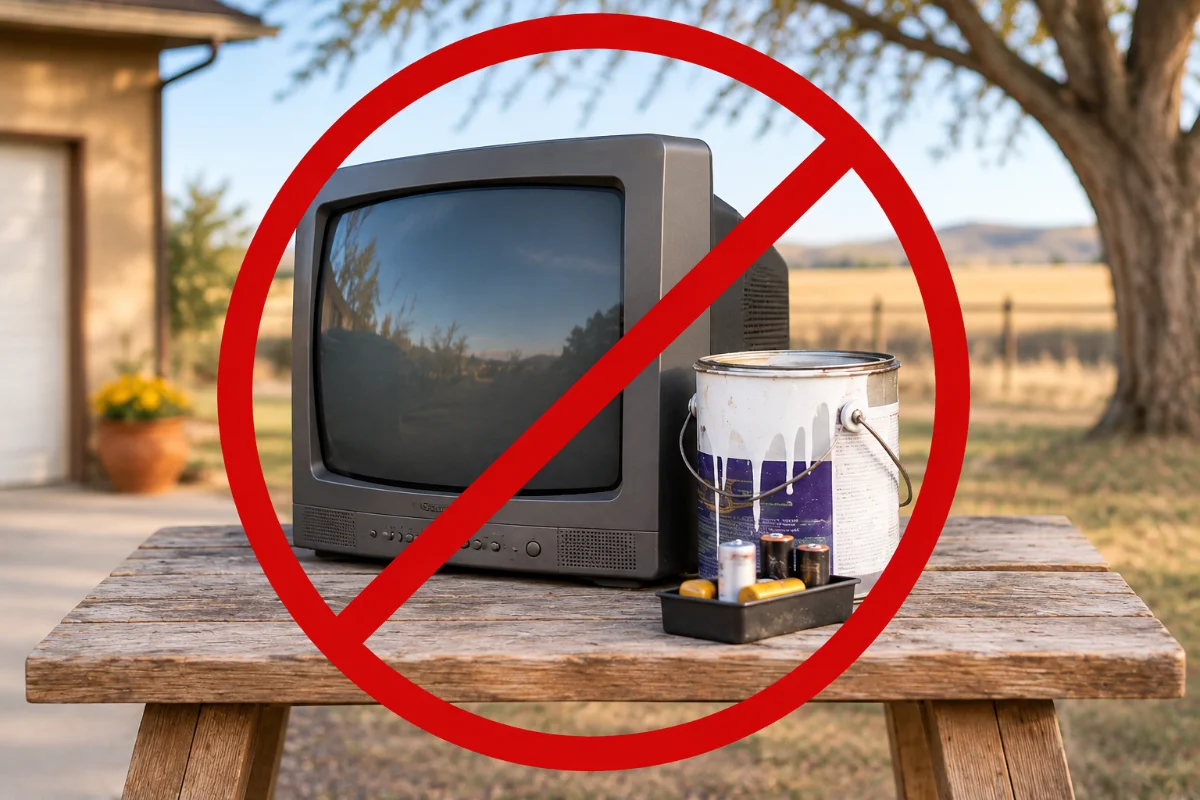
Not everything that fits inside a curbside trash tote belongs there. Old televisions, lithium batteries, leftover paint, and hazardous household chemicals can create problems when mixed with ordinary household trash. Understanding which items need special disposal helps protect collection crews and our environment, prevent fires and spills, and keep your regular trash service running smoothly.
You’ve replaced the television in your living room, and now the old one is sitting beside the garage. Can you just put it in your curbside tote? At Mountain Disposal, we help families understand what’s accepted with residential garbage pickup in Colorado City, CO, and what needs a separate disposal arrangement.
Why Some Items Can’t Go in Curbside Totes
Your curbside tote accommodates acceptable everyday household waste. However, you should not consider everything that leaves your house safe to throw away. Electronics, certain batteries, liquid chemicals, and other restricted items require more care because of their contents, the way our collection equipment handles them, or the effect they have on the environment.
Consider what happens after the truck empties your tote. We compact the waste and transport it along with trash from other households. If a prohibited item breaks, leaks, or overheats, it can create problems for the driver, collection vehicle, or disposal facility.
Televisions are a common example. Older models may contain leaded glass, while newer electronics contain circuit boards and other components that require appropriate processing. Breaking a television into smaller pieces doesn’t make it suitable for ordinary garbage.
Lithium batteries pose another concern. They’re common in rechargeable tools, phones, laptops, and portable electronics. When crushed or punctured, these batteries can overheat and potentially start fires inside collection trucks or waste facilities.
Paint and household chemicals introduce different risks. Some products contain flammable ingredients, while others may leak or react with incompatible substances. Keeping them out of standard curbside totes reduces the chance of spills and hazardous exposure. And keeping them out of the landfills reduces the possibility of contaminating groundwater, which runs into our rivers, ponds, and streams.
We understand that separate disposal arrangements aren’t always convenient, especially in rural communities. Still, identifying restricted items before collection day is much easier than dealing with a problem after they’ve entered the waste stream.
What Garbage Pickup in Colorado City, CO Can’t Accept
Televisions and Other Electronics
An old television shouldn’t go into your regular curbside tote, even if it’s small enough to fit. Computer monitors and other electronic devices may also require specialized recycling or disposal because of their internal components.
Avoid breaking electronics apart to make them easier to discard. Damaged screens can expose sharp glass and other materials that create additional handling concerns.
Instead, call us to ask about available arrangements for the specific item. Separate disposal may involve an additional fee.
Lithium Batteries and Rechargeable Devices
Lithium batteries should stay out of regular household trash. A damaged battery can produce intense heat, and compaction equipment may crush batteries that appear harmless when placed in your curbside tote. Check rechargeable tools, portable chargers, toys, and older electronics before discarding them.
Never puncture, crush, or dismantle a battery. Swollen, leaking, or damaged batteries need particular care, so contact a qualified battery or hazardous-waste program for instructions.
Paint and Hazardous Household Materials
Leftover paint usually isn’t suitable for curbside disposal. Oil-based paints, stains, thinners, and solvents may contain hazardous or flammable ingredients that require separate handling.
Latex paint can have different disposal rules, depending on local requirements and whether it has dried completely. Don’t assume a sealed or nearly empty can is automatically acceptable.
Gasoline, pesticides, certain automotive fluids, and hazardous cleaning chemicals should also stay out of ordinary trash. Keep these materials in their original labeled containers whenever possible and call us about approved disposal methods.
When you’re unsure whether something is allowed, please contact us at Mountain Disposal before setting it outside. We’ll help clarify the next step rather than leaving you to guess.
How Proper Disposal Protects Your Community
Most households rely on trash collection without thinking much about what happens after pickup. But the people operating collection trucks handle waste from many properties, and one restricted item can create a problem beyond the household that discarded it.
A lithium battery fire can damage equipment and endanger workers. Leaking solvents or other chemicals can require special cleanup, while broken electronics may create sharp debris that makes waste handling more difficult.
These concerns are especially relevant in Southern Colorado’s rural communities. Reliable collection matters when residents may have fewer convenient disposal alternatives. Preventing avoidable problems helps support consistent service across collection routes.
At Mountain Disposal, we’ve served local communities for nearly 30 years. We know homeowners want clear instructions rather than complicated disposal rules, particularly when they’re cleaning out storage spaces or replacing household equipment.
That’s why we encourage customers to call before putting an unusual item in their tote. Knowing what something contains and whether it requires special handling can prevent unnecessary confusion on pickup day.
It’s also important not to leave restricted materials beside the tote without prior arrangements. Drivers may not be authorized or equipped to collect them during a regular route. Separate service should always be confirmed in advance.
What to Do With Items Your Tote Can’t Take
Start by identifying exactly what you’re trying to discard. For electronics, note the type of device and whether it contains a battery. For paint or chemicals, keep the product label available so its contents can be identified.
Next, contact Mountain Disposal to ask whether a separate pickup or disposal arrangement is available. Some qualifying large household items may be handled through bulk pickup, while electronics and hazardous materials may require different services.
Additional fees may apply when an item needs separate collection or special handling. Ask about pricing and acceptance before scheduling anything, because not every restricted material can be collected through the same process.
If Mountain Disposal cannot accept an item, ask about appropriate alternatives. Electronics recyclers, retailer take-back programs, battery collection sites, and household hazardous-waste events may accept particular materials under their own rules.
Avoid pouring chemicals down drains, mixing leftover products, or placing batteries inside other discarded items. These shortcuts can create new hazards instead of solving the disposal problem.
For ordinary household trash, our curbside tote pickup service provides dependable collection. Following the accepted-material guidelines helps keep that service straightforward for everyone.
Keep Your Trash Pickup Safe and Simple
Cleaning out a garage, replacing an old TV, or finishing a painting project should feel like progress. Finding out that an item can’t go in your curbside tote may be frustrating, but proper disposal helps prevent bigger problems for your household and the environment.
Televisions, lithium batteries, paint, and hazardous chemicals need special attention because they can create risks during collection and processing. Separating these items protects workers and equipment while helping regular household trash pickup remain dependable.
Mountain Disposal understands that rural residents need practical solutions, not complicated instructions. As a locally owned company serving Southern Colorado for nearly 30 years, we’re here to answer questions about accepted materials and discuss available disposal arrangements.
If you’re dealing with an old television, a bulky household item, or unfamiliar material, give us a call before placing it at the curb or in your curbside tote. We’ll help determine whether separate collection is possible, whether an additional fee applies, or whether a specialized disposal option is needed.
For reliable garbage pickup in Colorado City, CO, visit Mountain Disposal’s curbside tote service page.
Frequently Asked Questions:
Why can’t I throw my TV in the trash?
Televisions contain components that may need specialized processing. Contact your waste provider about approved electronics disposal options.
Can lithium batteries go in my curbside tote?
No, loose lithium batteries should stay out of ordinary trash. Damaged batteries can overheat and start fires. Obviously this puts our drivers, workers, transfer facility, and any landfill in danger.
Which household chemicals am I prohibited from disposing of in my household trash?
Gasoline, pesticides, solvents, and other hazardous chemicals generally need separate handling. Keep them labeled and call us about approved disposal.
Can I leave a television beside my tote?
Don’t leave a TV outside without arranging the collection first. Contact Mountain Disposal to confirm whether service is available. Failure to do so will mean your TV will still be sitting next to your trash bin because without prior notice, we won’t take it. You will see an additional fee on your bill for any TVs you have arranged for us to take and dispose.
Is there an extra fee for special disposal?
Yes, additional charges may apply to separately handled items. Ask us about acceptance and pricing before scheduling a collection.
What should I do with a swollen or leaky battery?
Don’t crush, puncture, or discard it in household trash. Seek guidance from a qualified battery or hazardous-waste program.