
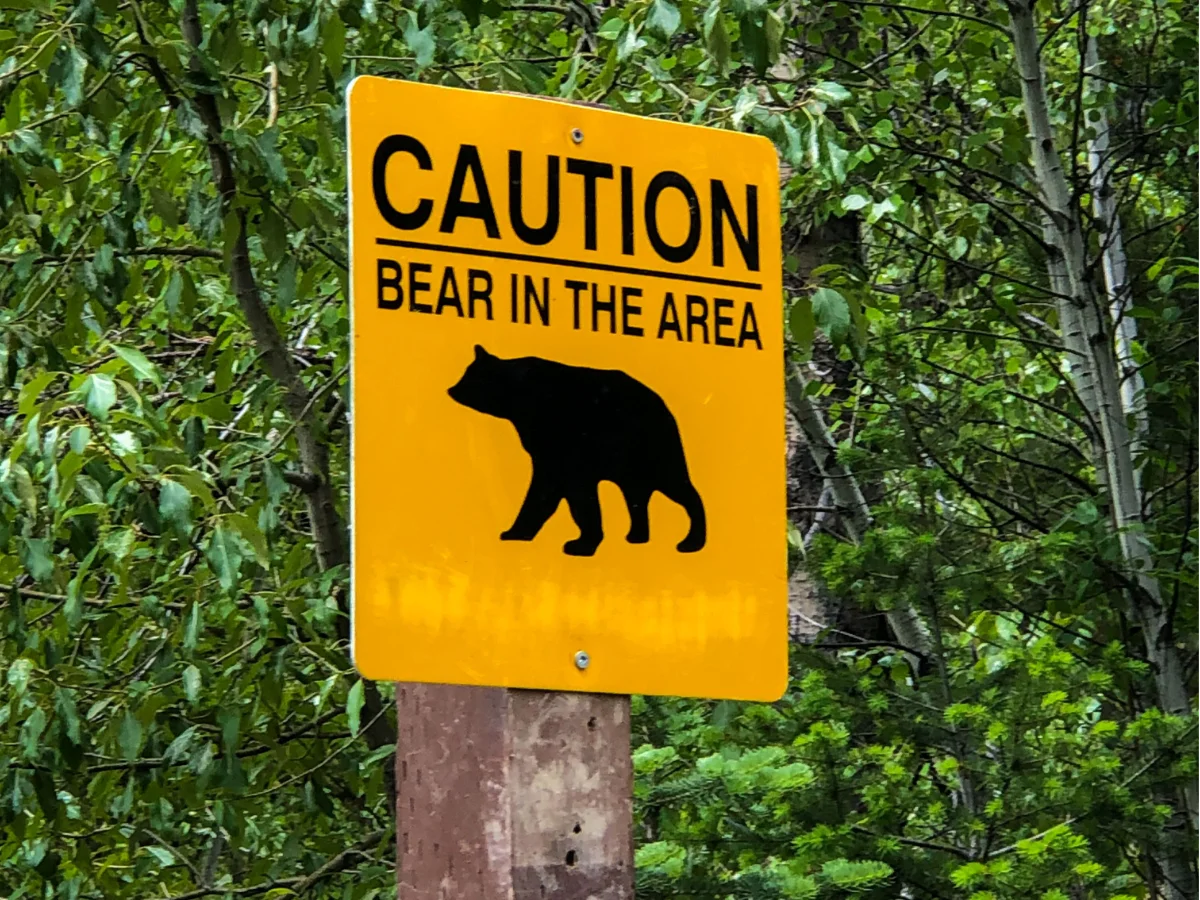
When the Aspen Acres Wildfire swept through Custer, Pueblo, Fremont, and Huerfano Counties, the damage pushed the wildlife (especially bears) into more populated areas. This is just one of the many consequences residents have to live with because of the fire. Our area and communities already had regular dealings with bears, but now the issue has grown. This has led to more people reaching out to Mountain Disposal about how they can keep bears out of their trash.
At Mountain Disposal, we have nearly 30 years of helping people manage their household waste when bears want food. With a few practical bear resistant trash storage habits, homeowners can make their garbage less accessible and help discourage bears from hanging around homes and neighborhoods.
Why Bears Keep Coming Back to Household Trash
To us, garbage is something we want off the property. To a hungry bear, a trash container filled with food scraps and other strong smells can seem like a dependable source of easy calories. A bear does not need to understand what is inside a tote to recognize that the smell could lead to food.
The bigger problem begins when the bear succeeds. If it gains access to a container, opens the lid, and finds something to eat, it has a reason to remember that location. That can lead to repeat visits to the same property or other homes nearby.
Preventing access is much easier than dealing with a bear that has learned to associate homes with food. Secure household trash removes the reward and makes the property less interesting. It also saves homeowners from repeatedly cleaning up garbage scattered across yards, driveways, and roads.
There is a community benefit as well. Southern Colorado residents value living close to open spaces and wildlife, and responsible waste storage helps maintain a healthy separation between the two. Keeping human food sources away from bears encourages them to find food naturally rather than relying on neighborhoods.
That starts with what we do with our garbage between collection days. Mountain Disposal provides dependable waste disposal services throughout Southern Colorado, but residents also play an important role by keeping household trash contained until it is ready for collection.
Bear Resistant Trash Storage Starts With a Secure Location
One of the simplest ways to protect household trash is to store it somewhere bears cannot easily reach it. A sturdy, locked building can work well when doors and windows remain securely closed. Garages, sturdy sheds, and similar structures can provide another barrier between wildlife and the smells coming from household waste.
The structure itself matters. Bears can be surprisingly determined once they smell something worth investigating, so a flimsy door or easily opened enclosure may not provide enough protection. If you use a shed or other outbuilding, make sure its doors close completely and use secure hardware.
Another option is a dedicated trash enclosure made with durable materials. Multiple secure latches or an auto-locking mechanism can make the enclosure more difficult for wildlife to open. This can be particularly useful on rural properties where garbage needs to remain outside until collection day.
Bear-resistant trash containers can provide another layer of protection. Before modifying a container used for curbside tote pickup, however, check with our office. Straps, locks, and other modifications can interfere with our collection equipment, and containers may need to be unlatched before service. A solution only works if it keeps wildlife out while still allowing the container to be emptied into our trucks.
Make Your Trash Less Accessible to Bears
Secure storage works best when paired with good everyday waste habits. Avoid leaving bags of household garbage sitting next to a curbside tote, particularly overnight. Even if the tote itself is secure, an exposed bag gives wildlife a much easier target.
This can become a challenge when a household generates more trash than usual or when cleaning up after the wildfires. Trying to stack bags around an overflowing container creates additional opportunities for wildlife to investigate.
Instead, match the disposal method to the type and amount of waste you have. Mountain Disposal offers bulk pickup for eligible oversized household items, which can help when a couch, mattress, table, or another large item does not belong in your curbside tote. Removing bulky items properly also helps keep driveways and trash storage areas more organized.
We also rent dumpsters and large roll-off dumpsters for big cleanup projects.
Electric Fences Are the Best Deterrent
Homeowners dealing with frequent bear activity, especially after the wildfire, and need bear resistant trash storage solutions may consider additional deterrents around outdoor trash storage areas. Properly installed electric fencing can discourage bears from approaching certain areas. Property owners should always check local regulations and follow manufacturer and professional installation guidance before using an electric deterrent.
Electric fences are relatively easy to install.
1. Fence a small perimeter around the cans.
Leave enough room so that a bear can’t simply reach across the wires to grab or tip a container. Use sturdy posts with proper electric-fence insulators.
2. Use a real wildlife/livestock fence energizer, not improvised household electricity.
You will want an energizer producing at least 6,000 volts and about 0.5 joule or more. AC-powered units are generally the most dependable, although properly sized battery or solar units can work in remote locations.
3. Run multiple horizontal wires.
Use at least 3 strands, although 5 or 6 is better. Put the bottom wire about 7–9 inches above the ground, space subsequent wires roughly 8–10 inches apart, and put the top wire about 36–42 inches high.
4. Pay particular attention to grounding in southern Colorado.
Dry or rocky soil can make an otherwise powerful fence ineffective. You may need a 6-foot galvanized ground rod, with additional rods where necessary. Follow the energizer manufacturer’s grounding instructions rather than improvising the electrical connections.
5. Test it; don’t assume it’s working.
Check the fence with an electric-fence voltmeter after installation and regularly afterward. Keep grass and weeds from touching the wires, repair loose wires or damaged insulators, and investigate any clicking/arcing. A fence that has grounded itself through vegetation may look perfectly fine while providing little deterrence.
6. Safety always!
Make your electric fence very obvious to people. Install electric-fence warning signs and position the enclosure so children, visitors, delivery workers, and pets don’t inadvertently contact it.
Remember, the goal is not to harm wildlife. It is to make your trash difficult and unrewarding to investigate. When a bear approaches a property but cannot reach a food source, it has less incentive to keep returning for the same reason.
Have questions about your household trash pickup? Please contact our office at (719) 489-3456.
Frequently Asked Questions:
Why are bears attracted to household garbage?
Household trash contains food scraps and strong odors that can signal an easy source of calories to a bear. Once a bear successfully finds food in garbage, it may return to the same location looking for more.
What is bear-resistant trash storage?
Bear-resistant trash storage means keeping garbage in a container or location that a bear cannot easily open or access. Secure buildings, an electric fence around your trash bins, durable trash enclosures, and purpose-built bear-resistant containers are common options.
Is a shed a good place to store trash in bear country?
A sturdy shed can be useful if its doors and windows close securely and the structure is strong enough to prevent access. Lightweight or damaged doors may not stop a determined bear from reaching garbage inside.
What should I do if a bear has already gotten into my garbage?
Clean up the scattered waste and improve your bear resistant trash storage so the animal cannot receive another food reward. If bear activity continues or creates a safety concern, follow current guidance from the appropriate local wildlife authorities.